

The Kentucky General Assembly utilized its authority to shape the state’s response to the pandemic during a three-day special session ending just before midnight on Thursday, September 9.
Upon the Governor’s call for a session, we passed bills in both the House and Senate dealing with many aspects of the COVID-19 pandemic ranging from education to public health to boards and commissions.
While no action taken during the pandemic will enjoy universal support, republican supermajorities took a balanced approach by focusing on public health, individual liberties, and localized control.
Recently, the Kentucky Supreme Court ruled that a lower court incorrectly blocked laws reining in the executive authority regarding emergency powers. With that, the legislature used this special session to extend some emergency executive actions and eliminate others. New COVID-19 mitigation strategies were also considered to provide relief to institutions strained by the pandemic, including schools, hospitals, businesses, and nursing homes.
Senate Bill 1 (SB 1) reaffirmed that there would be no statewide mask mandate in schools but instead leaves that decision to the local school boards. The goal of SB 1 is to prioritize in-person learning by stabilizing school funding, assisting with staff shortages, and creating conditions for state and local health departments to support local school districts with their COVID-19 mitigation plans.
Under this legislation, the Kentucky Department of Public Health (DPH) would develop a “test-to-stay” model for school districts to minimize quarantining for non-symptomatic students and staff, encouraging students to be in the classroom as much as possible. Additional language in SB 1 provides that the DPH shall assist local school districts in implementing their board-approved COVID-19 plans, whether it concerns a test-to-stay method, masking guidelines, contact tracing, or quarantining.
In light of critical staffing shortages, SB 1 will make it easier for retired teachers to return to the classroom, in some cases as soon as 30 days after retiring. It also provides temporary revisions for the hiring of substitute teachers, background checks, and school schedules.
Senate Bill 2 concerns one of the most heartbreaking parts of the pandemic and establishes safety protocols for loved ones to visit family members in long-term care facilities. This bill defines criteria for a family or friend to be designated as an essential, compassionate caregiver. SB 2 also acknowledges the Governor’s statewide mask mandate deficiency but encourages vaccinations, COVID-19 testing, and greater access to monoclonal antibody treatments, such as Regeneron.
A provision to SB 2 provides assistance for health care providers, jails, prisons, homeless shelters, and local health departments in acquiring COVID-19 tests. Another will allow paramedics to work in hospitals to relieve staff shortages.
Senate Bill 3 will redirect more than $69 million of State Fiscal Recovery funds to the Kentucky Cabinet for Health & Family Services. The money was left over from the repayment of a federal loan that was taken out to cover a surge of pandemic-related unemployment claims. These funds will help health care providers, schools, and others implement provisions of SB 1 and SB 2. These include purchasing COVID-19 tests, establishing regional monoclonal antibody treatment centers, and test-to-stay programs in schools.
Senate Bill 5 is an economic development incentive bill that will only apply to projects over $2 billion. While utilizing existing programs, incentives under SB 5 will be paid out over time to ensure any project meets the required job and wage targets. Some incentives will be in the form of forgivable loans.
Kentucky is in the running for at least one mega project eyeing Hardin County. Language within SB 5 can be compared to state economic development incentives the General Assembly passed in the late ‘80s, which brought Toyota’s first American assembly plant to Georgetown. It is now the world’s largest Toyota manufacturing facility where the Lexus ES350, Avalon, Camry and some hybrid counterparts are assembled.
Bills signed into law by the Governor included SB 3 and SB 5. Line-item vetoes placed on SB 1 and SB 2 were swiftly overridden. These bills contained an emergency clause, meaning they become law immediately upon the Governor’s signature.
The General Assembly still faces serious budget and policy decisions in the upcoming 2022 Regular Session. Still, we will remain dedicated to finding the best legislative course of action for citizens across the Commonwealth as we continue to navigate the pandemic.
Thank you for your questions and concerns. I hope you will remain engaged with legislative happenings for the remainder of the interim by visiting www.legislature.ky.gov or www.KET.org/legislature. It is an honor to serve you in Frankfort.
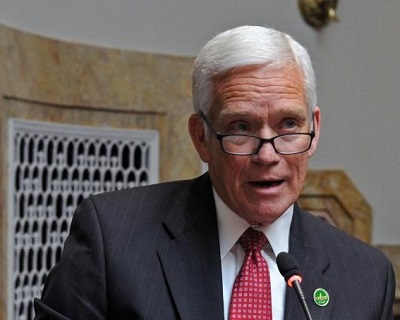
State Sen. Steve Meredith