




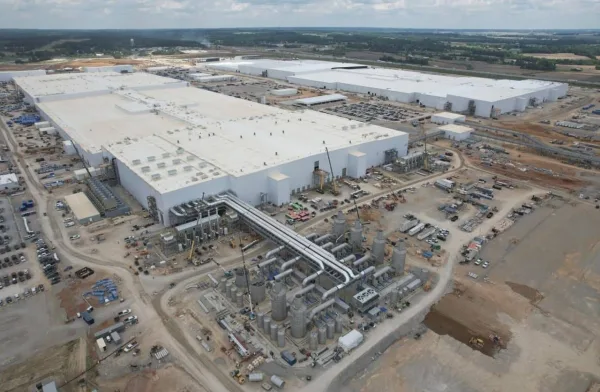
Ford Motor Co. plans to repurpose its U.S. battery manufacturing capacity in Glendale, laying off all 1,600 employees at the plant as it shifts toward the rapidly expanding battery energy storage systems market.
The move is designed to leverage underutilized electric vehicle battery capacity to create what the company describes as a diversified and profitable new revenue stream. Ford also plans to invest about $2 billion over the next two years to scale the business.
Ford announced Monday that it expects to begin shipping battery energy storage systems from its Kentucky and Michigan facilities in late 2027, marking a pivot toward what it calls “higher-return opportunities.” Overall, the company said it will take a $19.5 billion hit to profits as it transitions away from its EV business.
“Instead of plowing billions into the future knowing these large EVs will never make money, we are pivoting,” Ford Chief Executive Jim Farley said in an interview with the Wall Street Journal.
The Glendale facility will be converted to manufacture advanced battery energy storage systems of 5 megawatt-hours or more. Ford plans to produce LFP prismatic cells, energy storage system modules and 20-foot DC container systems at the site. The systems are designed for use by data centers, utilities and large-scale industrial and commercial customers.
Drawing on more than a century of manufacturing experience and licensed advanced battery technology, Ford said it expects to bring initial capacity online within 18 months. The company plans to deploy at least 20 gigawatt-hours annually by late 2027 as it seeks to gain market share in the growing U.S. energy storage sector.
State GOP Reps. Samara Heavrin and Steve Bratcher, who represent Hardin County, issued a joint statement expressing concern for workers affected by the layoffs.
“We are optimistic about Ford Motor Company’s decision to take over the Glendale facility and transition the project toward energy storage, particularly as initial plans for the project have faced significant challenges from the outset,” they said. “At the same time, optimism must be matched with both caution and accountability, and we will be watching closely to ensure commitments are met and honored.”
Sen. Matt Deneen, R-Elizabethtown, issued the following statement:
“As Ford moves through an organizational and ownership transition, there will be short-term challenges associated with that process.
“However, Ford’s $2 billion commitment to the Glendale facilities, coupled with its expansion of energy-storage battery production to serve a broad range of industrial and utility needs, underscores the company’s long-term commitment to this community. The company’s presence and employment in the region will continue as planned,” he said. “Ford has reaffirmed its commitment to add approximately 2,100 jobs as the facility is retooled, replacing positions affected during this temporary transition. The company is also working to ensure support and assistance are available to employees impacted in the short term, while moving forward with the hiring and investment commitments it has already made.”
In a video message sent to employees Monday, BlueOval SK CEO Michael Adams said the shift would lead to “the end of all BlueOval SK positions in Kentucky.” Adams did not specify how long the layoffs would last but said affected employees would continue to receive paychecks and benefits for 60 days.
Ford said it plans to hire 2,100 employees at the Glendale plant, and a company spokesperson said all laid-off workers will have the opportunity to apply for the new positions.
“This is a customer-driven shift to create a stronger, more resilient and more profitable Ford,” Farley said in a company news release. “The operating reality has changed, and we are redeploying capital into higher-return growth opportunities: Ford Pro, our market-leading trucks and vans, hybrids and high-margin opportunities like our new battery energy storage business.”
The announcement comes days after Ford disclosed that a planned partnership with South Korea-based SK On had fallen through amid declining demand for electric vehicles.
Last week, Gov. Andy Beshear partially blamed President Donald Trump’s “Big, Beautiful Bill” for the slowdown in EV demand, citing cuts to tax incentives that supported EV purchases and charging infrastructure.
According to the Wall Street Journal, Ford has lost about $13 billion on its EV business since 2023.
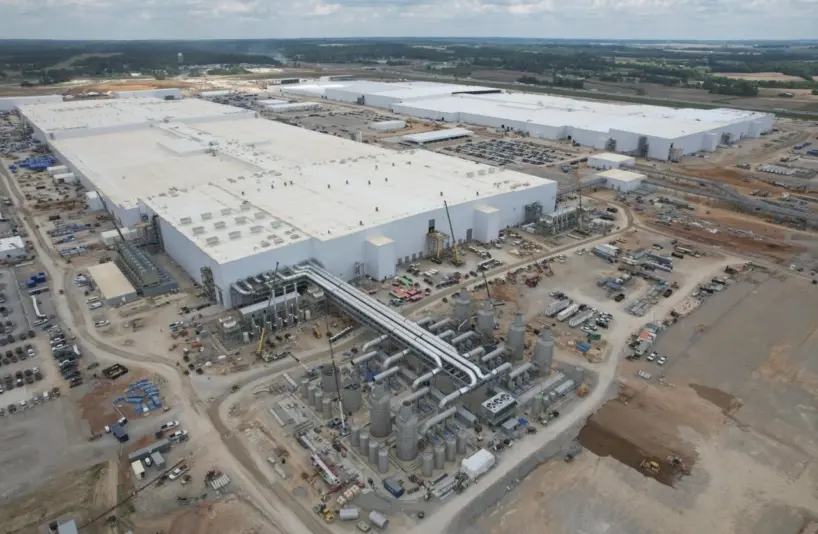
(Photo: The SK BlueOval plant in Glendale, courtesy of the The Korean Herald)
By Mark Maynard, Kentucky Today