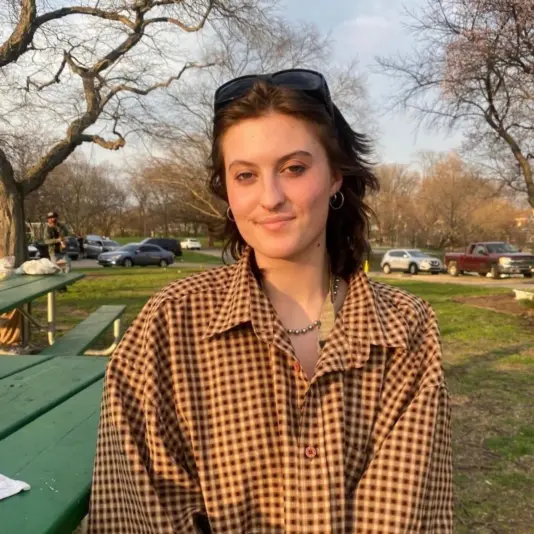






A Kentuckian challenging the state’s trigger abortion ban received a victory on Friday when Jefferson County Circuit Court partially granted her petition, striking down the law’s definition of when life begins.
Jessica Kalb, the sole remaining plaintiff in a 3 1/2-year lawsuit seeking the repeal of Kentucky’s Human Life Protection Act, has alleged the state’s trigger abortion ban impeded a religiously motivated desire to further expand her family.
Kalb, who is Jewish and a mother through the assistance of in vitro fertilization (IVF), cancelled a 2022 embryo transfer, fearing she would be forced to carry a non-viable fetus to term. She has articulated fear of punishment for disposing unviable or unused embryos.
Judge Brian Edwards ruled that the definition of “human being” in Kentucky’s abortion ban is unconstitutionally vague and unintelligible. He also noted the terms “unborn child,” “fetus” and “human being” have different statutory definitions.
According to Kentucky Revised Statutes (KRS) 311.720, the commonwealth’s abortion ban defines the terms as follows:
- “Unborn child” has the same meaning as “unborn human being” in 311.7KRS 72, meaning “an individual living member of the species homo sapiens throughout the entire embryonic and fetal stages of the unborn child from fertilization to full gestation and childbirth.”
- “Fetus” means “a human being from fertilization until birth.”
- “Human being” means “any member of the species homo sapiens from fertilization until death.”
“Because these conflicting and intertwined definitions are intended to apply to specific statutes, each of these statutes must be deemed void for vagueness and unintelligibility as to their scope.”
What that means for Kentucky’s abortion ban is unclear, but Edwards’ ruling did not include any injunction on the enforcement of the state’s pro-life laws.
A spokesman for the Office of Attorney General Russell Coleman, who is a defendant in the case, said his office was reviewing the opinion before determining next steps. “The Attorney General’s position remains that IVF is fully legal and those services in our Commonwealth are not at risk.”
Edwards was critical of the state addressing IVF-related concerns like those broached by Kalb through Attorney General Advisory Opinions, which he called “non-binding,” instead of legislative action.
“Ms. Kalb and others seeking to expand their families through IVF procedures have no binding assurance against the possibility that a prosecutor tomorrow interprets the statute differently and uses it as the basis for a prosecution,” Edwards said.
He determined Kalb and others like her cannot be assured that the abortion ban’s definition of “human being” will not be used for a homicide prosecution, even though the destruction of embryos cannot be prosecuted under the Human Life Protection Act or the state’s fetal homicide statutes.
“This conundrum can and should be resolved; however, the power to resolve rests not with this Court but with the Kentucky State Legislature,” said Edwards, adding earlier in his opinion
Judge Edwards also tossed out Kalb’s claim that the law infringes upon her religious freedom, finding the ban “is a religiously neutral, general burden upon virtually any Kentuckian of faith seeking to participate in IVF.”
For some, the definition of human life is settled despite ruling as lawyers weigh its implications
Representative T.J. Roberts, an attorney, said Kentucky’s trigger abortion ban was never about in vitro fertilization, and that the reading of the law is broader than what the General Assembly intended.
“KRS Chapter 311, and, in fact, every chapter of KRS, all have one thing in common: they don’t regulate IVF; they never have,” Roberts said. “I think the Attorney General ultimately gets it right on this. I believe that the statute remains intact for what it was intended to do. The order seems to be focused on the desire to receive an IVF treatment, and I would just say that the statute was never codified with that in mind.”
“I think that this could have been settled on a very simple grounds that KRS Chapter 311 never prohibited IVF in the first place, so there was no case or controversy whatsoever to be decided,” Roberts added.
Addia Wuchner, executive director of Kentucky Right to Life, said suggesting the law’s definition of human life is vague overlooks its scientific grounding and statutory application. “When the statue is read in full, the law applies specifically within the context of pregnancy and the intentional termination of life—it does not apply, regulate or prohibit IVF services.”
Wuchner said the beginning of human life is not a matter of opinion, but is an established biological fact.
“Human life begins at fertilization. At that moment, a new, distinct human organism is formed–possessing its own unique DNA and the inherent capacity to grow and develop through every stage of life,” she added.
David Walls of the Family Foundation told Kentucky Today the law’s definition of “human being” is “a simple biological fact that any reasonable person can understand.”
Kalb’s legal team declared victory on Friday.
“The Court declared the statutory definition of “human being,” which is “any member of the species homo sapiens from fertilization until death,” unconstitutionally void for vagueness. That single sentence has made every IVF patient in Kentucky wonder whether their embryos could one day be the basis of a homicide prosecution. Today, the Court said, “not in Kentucky,'” attorney Aaron Kemper said in a Friday Facebook post.
“This ruling is significant, and we are still working through its full implications. We expect it to be the foundation for future cases that further define reproductive rights in Kentucky. The State may appeal. We are ready. But today is a real, hard-won win for every Kentucky family that has been waiting for an answer.”
“We’re pretty sure this means that IVF is unequivocally safe and legal in Kentucky,” added Ben Potash, one of Kalb’s lawyers, in another post on Facebook. “We know this has major implications, but we are not quite sure yet exactly what this means. The future is unwritten.”
He also called the Friday ruling “the best news for Reproductive Freedom in Kentucky for many years.”
By Tessa Redmond, Kentucky Today